#OracleCloud, Chapter Two: What Happened After Ignite

and so on and so forth….

If you read my last post, you know where I left off — three months into Oracle, just back from the #Ignite class, still getting my arms around how #OracleCloud actually plays in the real world versus the slide deck. Figured it was time to close the loop on that chapter.

Short version: it went well. Longer version, keep reading.

I spent the next two years running healthcare cloud sales across the western and central US — payers, providers, academic medical centers, the works. Year one I landed at 140% of target. Year two, 170%. Numbers are numbers, but the deal that actually mattered was Baylor Scott & White — one of the biggest healthcare cloud wins Oracle had at the time, and one of those transactions that reminds you why “multi-threaded” isn’t just a buzzword sales trainers use to sound smart. That deal touched more stakeholders, more competing priorities, and more patience than anything I’d worked before. #WorthIt

Along the way I also got to sell OCI, Oracle Database, Exadata, and Autonomous Database into names like Humana, Kaiser Permanente, Mayo Clinic, and a handful of Blue Cross organizations — which, if you’re keeping score, is a pretty good tour of who actually runs healthcare IT in this country.

Here’s the part that surprised me a little: closing Baylor Scott & White didn’t just feel good, it changed what I was trusted to do next. Oracle handed me one of its largest strategic accounts — I can’t name the client, but it’s a life sciences company generating $100M+ a year in Oracle revenue — and my job shifted. Less “hit the number this quarter,” more “be the person this client trusts when ERP, HCM, cloud, hardware, and consulting all show up on the same call.” Different muscle entirely. #TrustedAdvisor isn’t a title, it’s something you have to keep re-earning every quarter, with a client that size.

That account kept me busy for about two years, and it taught me something I didn’t fully expect out of an “account management” role: managing a $100M+ relationship well looks a lot less like selling and a lot more like being genuinely useful, consistently, long after the ink is dry. #LongGame

Next chapter picks up after Oracle — a new company, new industry mix, and a very different kind of “rebuild” than the healthcare cloud years. That’s coming soon.

#OracleCloud #Healthcare #EnterpriseIT
#Cloud and Life at Oracle…

So, I have been at Oracle now for a little over 3 months…  really enjoying it!  Loving the teams I work with!  For the most part, great leadership, great teamwork and great collaboration!

Spent a week in Virginia attending the #professionalhire class called #Ignite.  A good week of refresher stuff…  got great value from the “this is how you really get *this* done in #Oracle” discussions.   Learned that Oracle is trying to bring in a more #empathetic sales force…  a sales force that actually #feels for and #understands their clients and put themselves in their clients #shoes.

Cloud sales are #fun!  Fun is a different way than you might think of a #goodtime.  LOL

Arguably there are no other companies that know the #enterprise like Oracle knows the enterprise!  A few themes consistent and prominent in the #OracleCloud; #Performance, #Consistent, #Predictable, #Secure, #Scalable, #CostEffective, #End-to-End, #Autonomous, and #Optimized.  With that understanding in mind, #OracleCloud has been designed from the ground up to run applications for #ERP, #HCM, #talent management, sales and marketing, and customer experience.

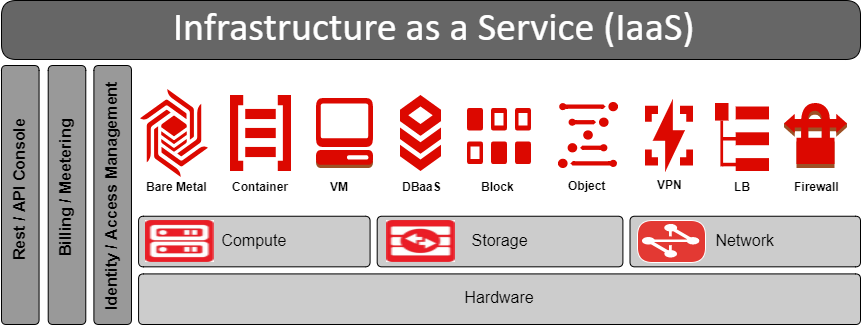
Oracle IaaS

In addition to running the applications that Oracle offers, a recent cloud announcement encouraging clients to #BringYourOwnLicense ( #BYOL ) to the Oracle Cloud highlighting the option to run non-Oracle “stuff” in our cloud.  This capability is not new, but has been recently highlighted as Oracle goes #headtohead against #AWS, #Azure and #Google.

Many people forget that Oracle is in the #hardware business too! Industry leading X5’s and X7’s are available in the Oracle #datacenters!  What does this mean?  This means #you can leverage #StateOfTheArt technology, that perhaps due to #budget #constraints, many clients may not be able to afford, by going to the #OracleCloud!

Sales… a 101 discussion

Sales skills, for the most part are inherent in a persons personality (my opinion)…  It’s almost impossible to teach someone to be a type A personality and I have read study after study that the best ‘sellers’ are type A personalities.  All of that aside, and by no means do I claim to be “the” expert in sales, or better said Solution Sales, there are specific tasks and steps that must be followed by sales people, no matter the industry or product, that must be followed.  If you miss any of the primary steps in a sales cycle, you CANNOT expect the deal to close.  Basically saying that just because you get a welcoming wave from the security guy or a smile from the EA or secretary, does NOT mean you have a sale!

In the 20+ years I have been in sales, I have had the opportunity to study, learn and practice many different sales techniques from Solution Sales, SPIN Selling, Customer Centric, Consultative Selling, Signature Selling and etc. etc. etc.  They all have their merits and are all very effective if practiced.  I say practice, because that is how we get good at things.  Once you have your methodology down and are executing effectively, the work still isn’t finished…  You have to qualify and track the sale through it’s process.   This tracking or lack thereof by many sellers is the reason for this blog.

My favorite, and I know there are many, methodology for sales tracking is MEDDIC.  MEDDIC was originally introduced to me by a VP of Sales at IBM, a friend and mentor, Kevin Painter.  At the time, Kevin lead worldwide sales for IBM’s Enterprise Content Management brand.  We found this methodology to be an extremely effective way to manage our sales.

A little about MEDDIC and what it means…

M – Metrics – What’s the economic impact of your solution?

E – Economic Buyer is the person who discretionary use of funds

D – Decision Criteria is the formal criteria used to compare vendor’s offerings

D – Decision Process is the process used to decide upon and purchase your solution… The actual PO process.

I – Identify Pain – What is the customers pain, and do they agree that it is a pain?

C – Champion – Who is the key player within the account to help you drive the deal to close?  Sells for you.

As a sales person in the B2B and/or enterprise space, if you cannot effectively answer each and every one of these questions, you do NOT have a sale!  The best part about MEDDIC is that it really isn’t about the reporting…  as Kevin used to tell us regularly, “I’m not trying to just give yet another spreadsheet to fill out!”.  This is a process that helps the sales people better understand their territory, their opportunity, and perhaps most importantly their sales forecast.

For a deeper explanation of the above criteria check out this link.

And for a little fun…  many of us are convinced that Dilbert did in fact work for IBM.